

Radical pragmatism in therapy
In the world of conventional therapy, there’s a strong reliance on what has been taught: the methods, models, diagnoses, protocols, and theories central to professional training. Especially the basic assumptions about how human emotions and behaviors arise and should be corrected. Yet, most clients don’t fit these frameworks—because people have their own lived experiences and are shaped by individual neurobiology, largely influenced by early attachment in childhood.
This is where radical pragmatism becomes relevant. The idea, inspired by the philosophy of William James, holds that “truth is what works.” In therapy, this means that the effectiveness of our support isn’t determined by how well clients fit a model, but by how well our theories do—or do not—fit the client. Often, this requires letting go of the theory and falling back on more than what we were trained to do.
The power of radical pragmatism
Radical pragmatism challenges us to be flexible, creative, and responsive in therapy. It asks us to:
- Put the client’s reality at the center
No life fits a standard therapy manual. People are complex and their experiences, needs, and responses constantly shift. A radically pragmatic approach means we continuously attune to where the client is, rather than trying to mold them to fit our methods. - Rely more on human interaction
Theories and techniques matter, but they are tools—not goals. Therapy that doesn’t connect with the client, no matter how evidence-based it is, remains ineffective. Radical pragmatism invites therapists to step outside what doesn’t work, even if it feels familiar. - Let outcomes take precedence over theoretical frameworks
It’s not about how well a method reads in a textbook—it’s about whether it makes a difference in someone’s life. If it doesn’t work, it should be the therapist’s responsibility to adapt and expand their knowledge and practice.
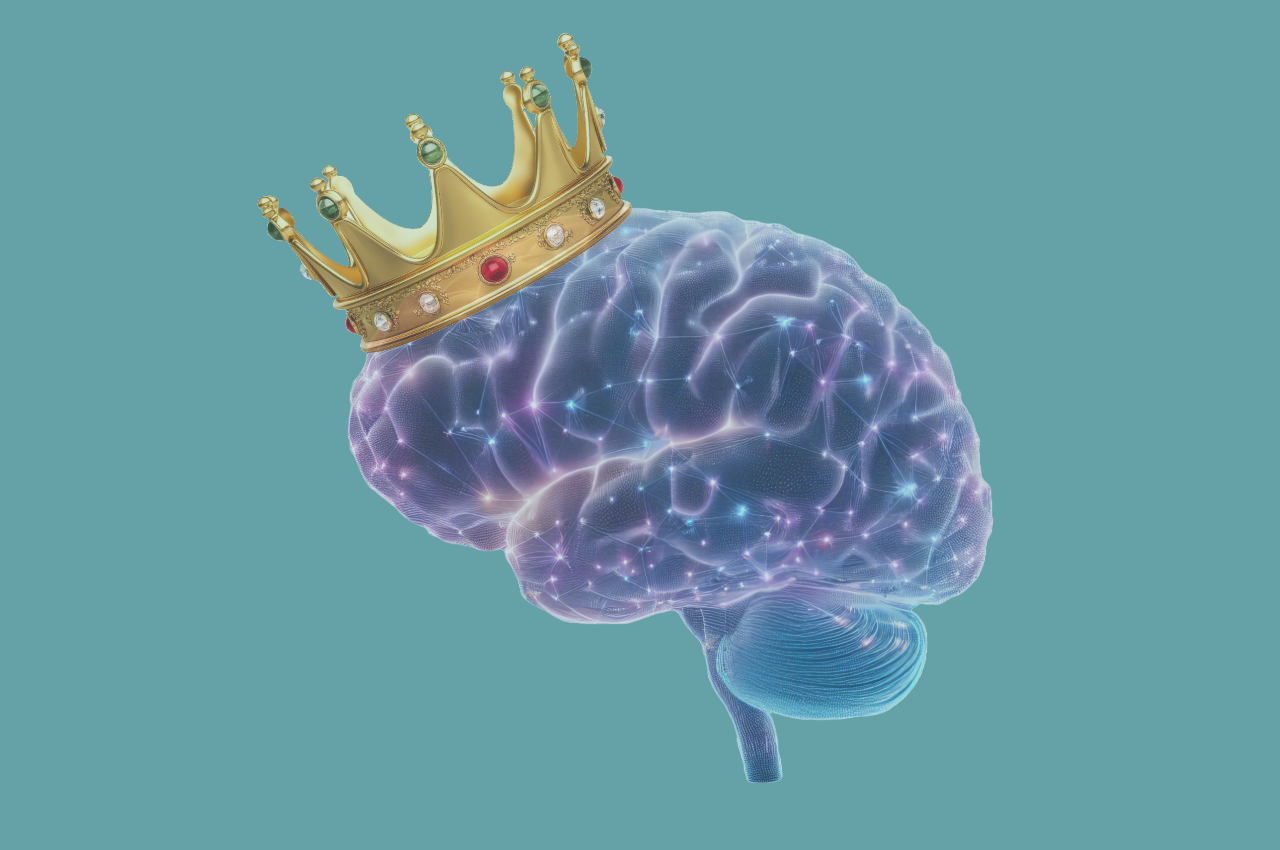
King cortex on its knees
Conventional healthcare assumes we are primarily thinking beings—that the rational brain is always in control, driving behavior, operating independently, and guided by willpower. King Cortex. Nearly every model is based on this assumption. It’s not surprising—it’s a legacy of Enlightenment-era philosophy and science. Think of Descartes: “I think, therefore I am.”
But Descartes’ actual conclusion was, “I doubt, therefore I think, therefore I am.” A reversed analysis. Yet dropping “doubt” was convenient for the Industrial Revolution—it made it easier to suggest that if a person is what they think, then they can be taught to think differently and thus adapt their behavior to what the economic system demands.
Nearly all societal systems since have been built on that reasoning: if you want it enough, you can do anything. If not, it’s your individual failure—a sign of resistance, lack of willpower, disobedience, or mental dysfunction requiring treatment, so you can quickly return to the “right path.” Everyone facing the same direction—but with consequences that fall solely on the individual.
Official therapeutic systems are still built on this foundation. Despite overwhelming evidence about human neurobiology and the clear reality that we are not merely thinking beings, little changes in how care systems are structured. And that too makes sense—these systems are costly to create and maintain. And an economic system doesn’t benefit from people living freely on their own terms, becoming less controllable.
Evidence-based: the perfect hiding place
“Therapy models are evidence-based, so they must work.” Perhaps the most misleading phrase used to justify not evolving the system. Science should always serve reality. And if we look pragmatically at how well our systems are functioning—both in structure and practice—we can no longer honestly claim they are effective enough. Especially when we compare them to what we know about human biology. We now have scientific evidence showing what happens in a human under stress: King Cortex shuts down. The brain can’t think, listen, learn, organize behavior, or assess consequences. And yet that’s exactly what’s expected in therapy, in medical care, and in coaching. People are pushed toward the norm.
Practicing radical pragmatism in therapy requires humility and courage. It means letting the client lead, offering support, and trusting their capacity—being both a steady presence and a gentle guide. It is not our job to fix people—we can’t. Yes, care providers are also bound by systemic consequences if they don’t follow the rules. But do we want to keep working in systems we know are too rigid and controlling? Ideally, a care provider should strive to meet the client where they are—by growing and learning beyond the limits of the system. What freedom that could bring—for all involved.
As William James said: “Truth (of the client – ed.) is what works.”
Let’s focus on that.
Other interesting Thoughts
When you do, please know that we only use your details for this purpose, you can unsubscribe at any time!
You're a genuine Trauma Informed professional? Write for this brand new platform!

Inspired? Make a donation so we can keep bringing new perspectives!