

The myth of the ‘nervous system’
In recent years, there’s been a growing focus on the nervous system. In trainings, on social media, and in therapy and coaching settings, you often hear things like: “You need to learn to regulate your nervous system,” or, “If you activate or reset your vagus nerve, you’ll heal your trauma.” The polyvagal theory, developed by Stephen Porges, has played a major role in this. Terms like ventral state, dorsal shutdown, and sympathetic activation have become part of everyday language — not just among professionals, but also among people seeking relief from what they’re experiencing.
This shift has brought many positive things: finally, there’s more attention for the body. But there’s also a pitfall — the assumption that regulating the autonomic nervous system (ANS) automatically leads to healing the neurobiology. In reality, it works quite differently.
When someone says their nervous system is “dysregulated,” they usually mean: I feel overwhelmed, disconnected, or unsafe. What follows is often a well-meant attempt at regulation: breathing techniques, cold exposure, touch, movement. These interventions are aimed at the autonomic nervous system — the part that controls heart rate, breathing, and muscle tension, among others.
The role of the Autonomic Nervous System
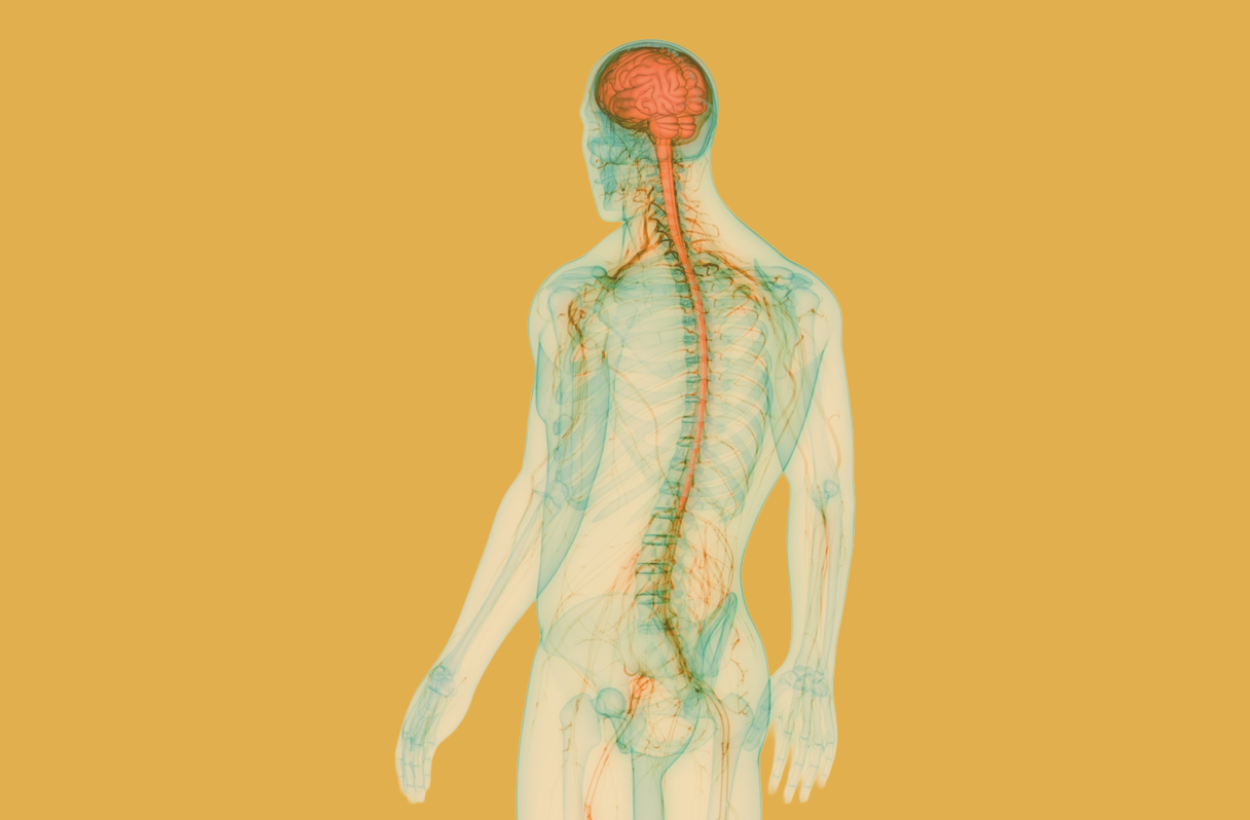
But the nervous system is more than that. It consists of:
- the brain
- the spinal cord
- and all the peripheral nerves that carry signals through the body
Together, they form a complex system where information is constantly being processed and transmitted. The ANS functions without conscious control, but it doesn’t decide on its own how or when to react. It follows instructions from other parts of the brain — especially from the brainstem. It adapts to the internal state, but it doesn’t define it.
This is where the word autonomic often creates confusion. It means “not consciously controlled” — not “independent in decision-making.”
Brainstem
In the brainstem, signals from across the system are integrated. Based partly on past experience, a split-second decision is made: is this safe, or not? If the answer is “no,” a survival response is activated. The ANS then carries out that response in the body. Meanwhile, the cortex is temporarily overridden.
Some brainstem regions are not only concerned with threat, but also with orientation. They help you feel where you are — literally. Think of balance, gravity, direction. If you couldn’t safely be present in your body or in reality during early development, this orienting capacity may not have fully developed. The system then loses its sense of location, and stays on high alert — even if you appear “calm.”
Regulating the ANS may bring temporary relief, but it doesn’t shift the brain’s deeper perception of danger. That doesn’t make it pointless — it’s often essential for being able to connect to yourself or others at all. But it’s not the same as healing. If the brain keeps organizing toward unsafety, you remain dependent on conscious regulation. Healing means that regulation becomes spontaneous — because the system is capable of it.
Healing
Healing begins when the brain can start organizing toward safety instead of danger. When the brainstem and cortex are able to work together again, so that sensing and thinking are no longer opponents but collaborators. Repairing internal connections opens the door to connection with others. Orientation plays a key role in this. Only when the system knows where it is — and where you end and someone else begins — can there be room for clarity, direction, and choice.
If we want to truly understand trauma, we need to know where in the system the reaction starts, why it keeps returning, and what’s missing for safety to be experienced. Neurobiological knowledge helps make these processes visible — and brings structure and logic to the path of healing.
Other interesting Thoughts
When you do, please know that we only use your details for this purpose, you can unsubscribe at any time!
You're a genuine Trauma Informed professional? Write for this brand new platform!

Inspired? Make a donation so we can keep bringing new perspectives!